
Part 1 Evacuation
Slopes
Draining water from a flat roof prevents premature wear of the roofing system and the risk of infiltration. An adequate slope system can cope with increasingly frequent heavy precipitation and reduces the risk of freeze/thaw cycle movements. Prior to the design of a complete pool renovation, we analyze the slopes in your building’s structure to propose a slope plan that the supplier will approve for warranty purposes and thus allow optimal drainage.
Locusts
Mechanical units, access hatches or any other openings on the roof represent obstacles to water flow. Locust slope insulators are installed under the membrane to allow water to bypass these obstacles.
Cashier
For conventional insulated roofs, we consider it essential to install sumps at each drain to ensure positive drainage of water to the drain. This feature helps ensure that the drain is the true low point of the basin.
Part 2 Drains
Evacuation capacity
To avoid problems with rainwater backup, it’s important to calculate the dimensions of the drain columns. This calculation is based on a chart of anticipated rainfall by region and the requirements of each municipality.
Duct insulation
Roof drain insulation in Quebec and Canada is governed by building and construction codes to prevent condensation or frozen pipes. Existing building codes require that horizontal and vertical interior downspouts be insulated with a minimum of 1″ of insulation for the first 4 feet around the drain.
Controlled-flow drain
In our opinion, drains should discharge rainwater at the level of the waterproofing membranes. However, the sewage and stormwater systems of some municipalities make the use of controlled-flow drainage systems necessary, if not mandatory. We don’t use such a system unless it’s required by the municipality, because the initial design of the building must have been made accordingly; any obstacles or openings will have to be moved away from the drains, the height of parapets increased, the installation of overflow scuppers to avoid overloading the roof, increasing the weight of ballast in the lower parts and other points to be checked before installing this type of drain.
Drain heater
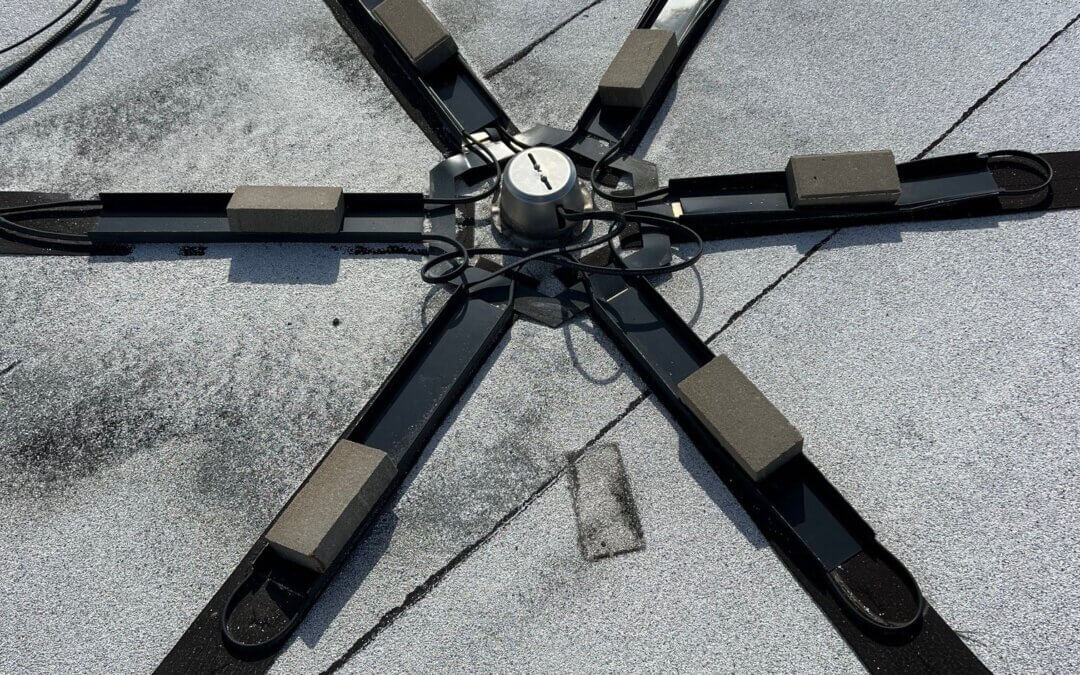
Although roofing systems are highly resistant to the elements, this system can protect them, improve their performance and extend their lifespan. This heating system is designed to combat ice build-up and the resulting ice dams. Our customers who have installed them have seen the benefits in terms of snow removal cost savings from the very first winter. It works by self-regulation, so it’s simple and fully automatic.
Part 3 Water retention
In view of growing urban development, many municipalities and boroughs are increasing their water retention capacity. Here’s a brief explanation of the different options available to bring your building into line with the new requirements.
Underground HDPE modular boxes
These are high-density plastic (HDPE) modules, often openwork and honeycombed, assembled to form a hollow volume. Installed under the ground (under parking lots, plots of land, green spaces), they are used to temporarily store rainwater. Water can be :
-
- Slowly released via orifice/regulator (peak control).
- Infiltrated into the ground by the granular foundation if permeability is sufficient.
Blue roof
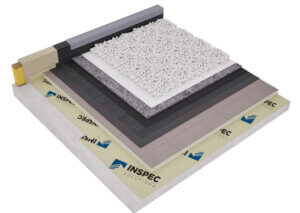
Blue Roof is a rainwater management technique that uses the roof of a building as a temporary reservoir to store and regulate rainwater before discharging it into the sewer system or a pond. This solution is used mainly in urban environments where floor space is limited.
Green roof
The water retention capacity of a green roof is highly dependent on the type of system installed, the composition of the substrate and the thickness of the soil. In practice, standards (such as those of the FLL in Germany, which are often adopted in Quebec and elsewhere) consider that 40-80% of annual precipitation can be retained by a well-designed green roof.