
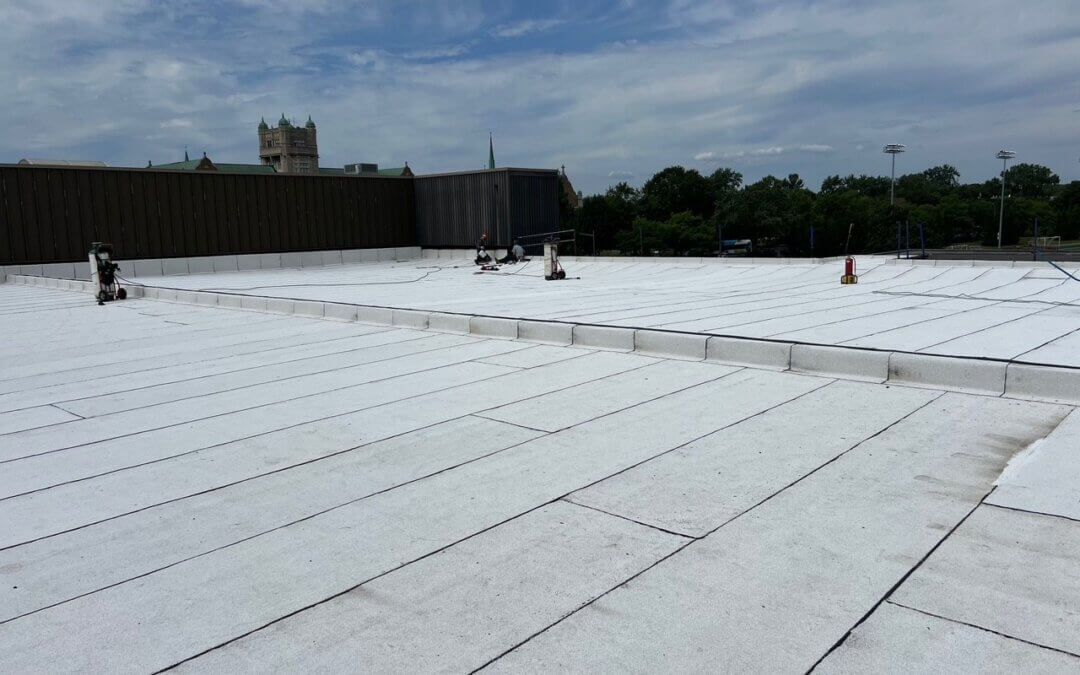
One of the most effective strategies for reducing the energy consumption associated with cooling buildings is to prevent solar radiation from increasing indoor temperatures. Buildings account for more than 70% of the electricity consumed in the country, with a significant portion dedicated to maintaining thermal comfort during the summer. In full sunlight, a dark roof can be up to 21 °C warmer than a light-colored surface made from reflective materials. This temperature difference can have a major impact on a building’s heat gain.
Even in colder climates, the use of a “cool roof” offers measurable benefits by reducing the overall thermal load. According to the Department of Energy, replacing dark roofs with light, reflective ones could result in substantial nationwide energy savings each year.